Aisha stood in her kitchen in Kuwait City, hand hovering over the chrome lever of the sink. She didn't expect a miracle. She just wanted a glass of water. When she pulled the handle, there was a hollow, metallic gasp—a dry wheeze from the pipes that sounded like a dying breath. Outside, the heat was a physical weight, 48 degrees Celsius, pressing against the glass of her windows. Without the desalination plants, that heat wasn't just uncomfortable. It was a predator.
This isn't a scene from a dystopian novel. It is the immediate, visceral reality facing millions across the Gulf. When news cycles report on "infrastructure damage" or "regional kinetic exchanges," they often miss the sound of that dry faucet. They miss the flickering of a hospital ventilator in Manama or the sudden, terrifying silence of an air conditioning unit in Dubai.
Recent strikes attributed to Iranian-backed operations haven't just targeted military outposts or political symbols. They hit the jugular. By striking the energy and water hubs of the UAE, Bahrain, and Kuwait, the regional shadow war has moved from the outskirts of the desert into the very heart of the kitchen, the bedroom, and the nursery.
The Fragile Miracle of the Gulf
To live in the Gulf is to participate in a daily defiance of nature. Every drop of water swallowed in a skyscraper in Abu Dhabi was once salt-heavy brine, pushed through massive membranes at incredible pressure. Every breath of cool air is a gift from a power grid that works harder than almost any other on earth. These nations are modern marvels, but they are built on a foundation of extreme vulnerability.
Consider the math of survival. In a place like Kuwait, natural freshwater sources are virtually non-existent. The state relies on desalination for over 90% of its potable water. If the plants stop, the clock starts ticking. A city of millions has only days of reserve before the bottles run out and the taps become useless relics.
When Iranian drones or missiles find their way to a transformer station or a pumping hub, they aren't just breaking machinery. They are snapping the life-support cables of entire civilizations. We often talk about "energy security" as a boardroom concept, a line graph on a slide deck. It feels different when you are bathing your child with a damp cloth because the water pressure has vanished, and the backup tanks are empty.
The Anatomy of a Blackout
The strikes follow a chillingly logical pattern. They target the nodes where energy and water intersect. In the Gulf, you cannot have one without the other. Desalination requires immense amounts of electricity. If the power grid flickers, the water stops flowing.
Hypothetically, let’s look at a technician named Omar in a Bahraini power station. When the alarms begin their rhythmic screaming, Omar isn't thinking about geopolitics or the Strait of Hormuz. He is looking at a console showing a sudden, catastrophic drop in frequency. A strike on a nearby substation has created a surge. To save the rest of the grid, he has to shed load. That means choosing which neighborhood goes dark.
It means deciding which district loses its cooling in the middle of a summer afternoon.
The strategy behind these strikes is clear: psychological exhaustion. By making daily life unpredictable, the aggressor aims to erode the social contract between the citizen and the state. If the government cannot guarantee a cold glass of water or a light switch that works, the very fabric of the city begins to fray. It is a siege without a trench, a war fought through the wires and pipes that we usually take for granted.
The Invisible Stakes
Why these three? The UAE, Bahrain, and Kuwait represent different but vital pillars of the regional architecture. The UAE is the global hub, a statement of what the future looks like. Bahrain is a critical security node. Kuwait is a historical bridge. By hitting all three, the message is sent that no amount of wealth or international integration offers a shield against a well-placed drone.
The technology used in these attacks isn't always the high-end, multi-million dollar ballistic missile of the past. Often, it is the "suicide drone"—cheap, slow, and difficult to track. These are the "asymmetric" tools that have turned the tide. You can spend billions on a missile defense system and still lose a substation to a plywood drone that costs less than a used car.
This creates a terrifying imbalance. The cost of destruction is pennies compared to the cost of protection. For every mile of pipeline or every acre of solar farm, there are a thousand points of failure. The Gulf states are realizing that their greatest strengths—their massive, centralized infrastructure projects—are also their most tempting targets.
The Human Cost of Kinetic Geopolitics
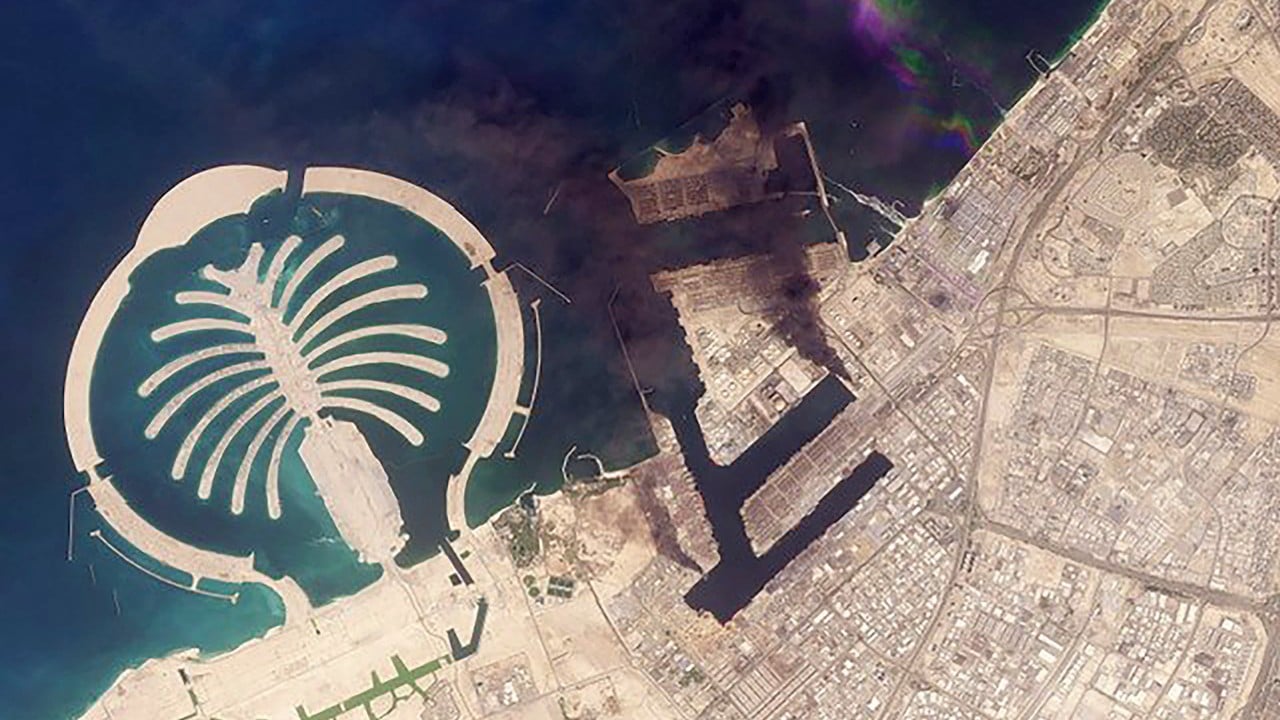
We see the smoke on the news. We see the grainy satellite photos of charred storage tanks. What we don't see is the quiet panic of a small business owner in Kuwait whose entire inventory of frozen goods is melting into a puddle on the floor. We don't see the elderly resident in a high-rise who can't use the elevator and is trapped in a concrete box that is rapidly heating up to lethal temperatures.
These are the silent casualties. They won't be listed in the "killed or wounded" columns of a military report, but their lives are being dismantled nonetheless. The trauma of losing basic certainties—water, light, safety—leaves a scar that lasts longer than a crater in the sand.
The reality is that the Gulf is a laboratory for the future of warfare. This is no longer about seizing territory. It is about seizing the "normalcy" of the population. If you can control the climate inside a person's home, you control their political will.
Seeking a New Resilience
There is a frantic, quiet rush happening now behind closed doors. Engineers and policy makers are realizing that centralization is a trap. The answer to these strikes isn't just more Patriot missiles; it is a fundamental redesign of how a city breathes.
Decentralization is the new watchword. Imagine a city where every building harvests its own water from the air and generates its own power through integrated glass. Imagine a grid that doesn't "break" but "bends," rerouting energy through a thousand tiny veins instead of three massive arteries. This isn't just a technological preference. It is a survival strategy.
But that transition takes years, and the drones are flying today.
As the sun sets over the Persian Gulf, the skyline of Dubai glows with a defiance that is both beautiful and brittle. The lights stay on for now. The water still flows through the hidden veins of the city. But the silence in the pipes of Kuwait City serves as a reminder. The modern world is a miracle, and like all miracles, it is fragile.
Aisha finally heard a gurgle. A thin, brown stream of water sputtered from the tap, coughing as air escaped the lines. She let it run, watching the murky liquid gradually turn clear. She filled a glass, her hand trembling slightly. She drank it standing up, eyes fixed on the horizon, wondering when the silence would return.