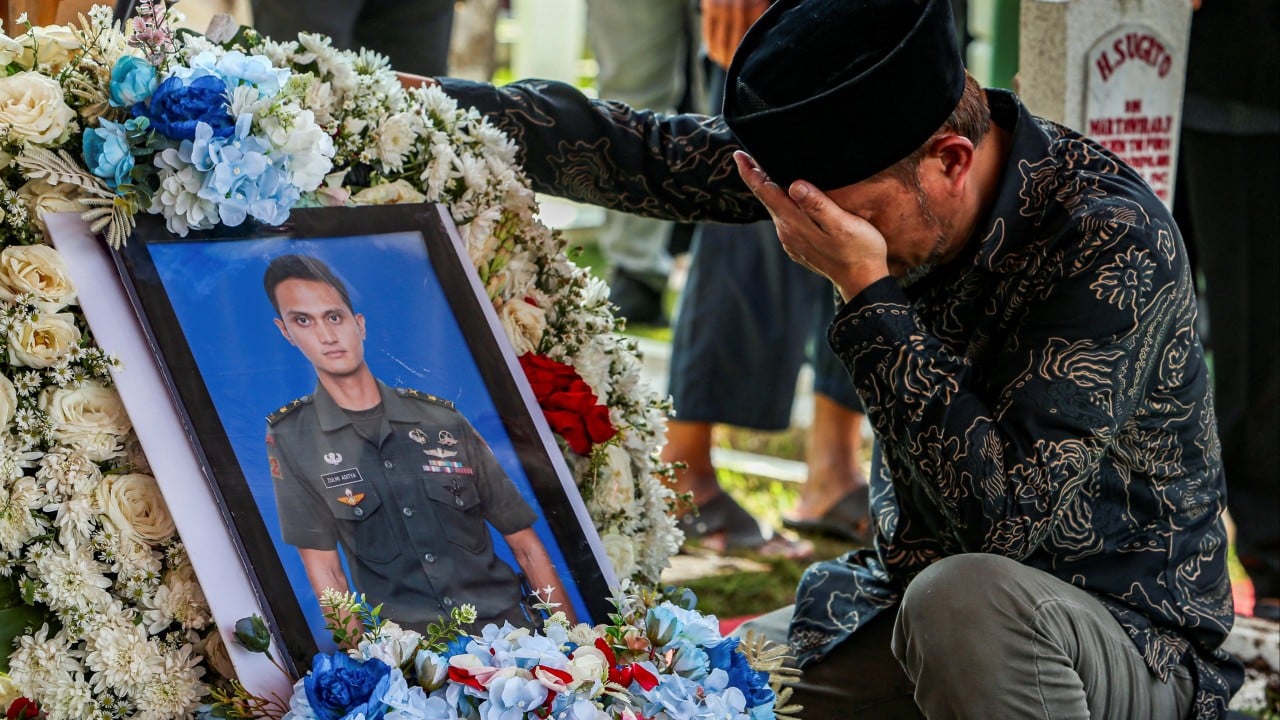
The funeral processions in Jakarta were somber, draped in the expected aesthetic of national sacrifice. We watch the caskets, hear the bugles, and listen to President Prabowo Subianto condemn "unacceptable" attacks on UNIFIL troops with the practiced indignation of a statesman. The media follows the script: brave soldiers, a rogue strike, and a call for international law to magically fix a fifty-year-old knife fight.
It is a comfortable narrative. It is also a lie.
Indonesia is currently playing a game of geopolitical chicken in Southern Lebanon with a hand that contains no high cards. By sending thousands of troops into the "Blue Line" meat grinder, Jakarta isn't securing global peace. It is subsidizing a broken status quo that ensures the next war will be bloodier than the last. We are not peacekeepers; we are human shields for a diplomatic vacuum.
The Myth of the Neutral Observer
The central fallacy of the UNIFIL mission—and Indonesia’s outsized participation in it—is the belief that presence equals prevention.
The logic goes: if we put enough blue helmets between Hezbollah and the IDF, they’ll stop shooting. I have spent years analyzing regional defense postures, and I can tell you that "neutrality" in a binary conflict is a tactical impossibility. When you stand in the middle of two giants swinging axes, you aren't a referee. You are an obstacle.
Resolution 1701, the very bedrock of this mission, has been a dead letter for a decade. It mandated a zone free of any armed personnel except the Lebanese army and UNIFIL. Look at the ground reality. Hezbollah has built a subterranean fortress and a missile arsenal that would make some NATO members blush, right under the noses of Indonesian patrols.
When Indonesia cries foul because its soldiers are caught in the crossfire, it ignores the structural reality: UNIFIL is physically incapable of enforcing its mandate. We are keeping a "peace" that does not exist. By staying, we provide a false sense of security that allows both sides to avoid the hard, bilateral negotiations required for a real border.
Prabowo’s Grandstanding vs. Cold Calculus
Prabowo Subianto is a man who understands power. He knows that Indonesia’s massive contribution to UN peacekeeping—currently over 1,200 personnel in Lebanon alone—is a bid for a permanent seat on the UN Security Council. It is "soft power" bought with the hard lives of young men from Java and Sumatra.
But look at the ROI.
What has this "prestige" actually bought Jakarta? Does it give Indonesia leverage over Israeli defense policy? No. Does it grant us a veto over Hezbollah’s tactical decisions? Hardly. We are spending millions of dollars and risking the lives of our elite Garuda Contingent to be "relevant" in a theater where we have zero strategic interests.
The "lazy consensus" says that Indonesia must lead the Islamic world in defending Lebanese sovereignty. The reality? True leadership would be admitting that UNIFIL is a failed experiment. A real regional power doesn't just show up; it dictates terms. Right now, Indonesia is taking orders from a New York bureaucracy that hasn't successfully resolved a border dispute since the Cold War.
The Equipment Gap is a Death Sentence
Let’s talk about the hardware.
The competitor reports focus on the tragedy of the fallen. They don't focus on the fact that Indonesian peacekeepers are often operating with gear designed for low-intensity policing, not high-intensity electronic and kinetic warfare.
In a theater where AI-driven drones and precision-guided munitions are the baseline, a white-painted Anoa armored vehicle is a target, not a fortress. When the IDF or Hezbollah decides to "clear a lane," those white vehicles offer zero deterrence.
Imagine a scenario where a full-scale ground invasion bypasses a UNIFIL outpost. The peacekeepers have two choices: get out of the way and look impotent, or stay and get crushed. There is no third option where a UN badge stops a Merkava tank or a Kornet missile. By sending troops into this environment without the mandate to actually fight, we are effectively committing them to a policy of "die quietly so we don't cause a diplomatic incident."
Dismantling the People Also Ask Nonsense
People often ask: "Why can't the UN just protect the peacekeepers?" The question itself is flawed. The UN is not a sovereign entity with a ghost army. "The UN" is just a collection of countries like Indonesia. If the contributing nations aren't willing to green-light offensive operations to defend their own positions, the UN is just a logo.
Another favorite: "Doesn't UNIFIL prevent a wider regional war?" No. The threat of Mutual Assured Destruction between Hezbollah’s 150,000 rockets and Israel’s air force prevents the war. UNIFIL is merely the wallpaper in the room where the standoff is happening. If either side decides the cost-benefit analysis has shifted, they will move through the blue helmets like they aren't there.
The Cost of Staying is Higher Than the Cost of Leaving
Critics will say that withdrawing would be a "betrayal of our international obligations."
I’ve seen bureaucracies hide behind "obligations" while the body bags come home. The most courageous move Prabowo could make isn't condemning an attack; it's admitting that the mission is a strategic cul-de-sac.
If Indonesia wants to be a global player, it should focus its military assets on the North Natuna Sea, where we actually have sovereign interests at stake. Every dollar and every soldier stationed in Marjayoun is a resource diverted from our own borders.
We are obsessed with the optics of being a "good global citizen." Meanwhile, the heavy hitters—the US, Russia, China—don't put their own infantry in the middle of other people’s religious wars under a UN flag. They know better. They use proxies. Indonesia, in a bizarre twist of post-colonial insecurity, has turned its own national army into a proxy for a dysfunctional international body.
Stop Valorizing the Victimhood
We need to stop treating these attacks as "accidents" or "violations" that can be fixed with a sternly worded letter to the UN Secretary-General. They are the logical result of placing a static, non-combative force in a dynamic kill zone.
If the goal is to protect Indonesian lives, the solution isn't better bunkers or more "coordination" with the IDF. The solution is an immediate, phased withdrawal.
We must stop pretending that a peacekeeping mission without a peace to keep is anything other than a slow-motion tragedy. Indonesia’s military isn't a diplomatic prop. If the government continues to treat it like one, they shouldn't be surprised when the next shipment of caskets arrives.
The era of the "Blue Helmet" as a sacred shield is over. Technology and tribalism have killed it. It’s time Jakarta woke up to the 21st century and stopped sacrificing its finest for a seat at a table that doesn't even have a menu.
Pull them out. Now.