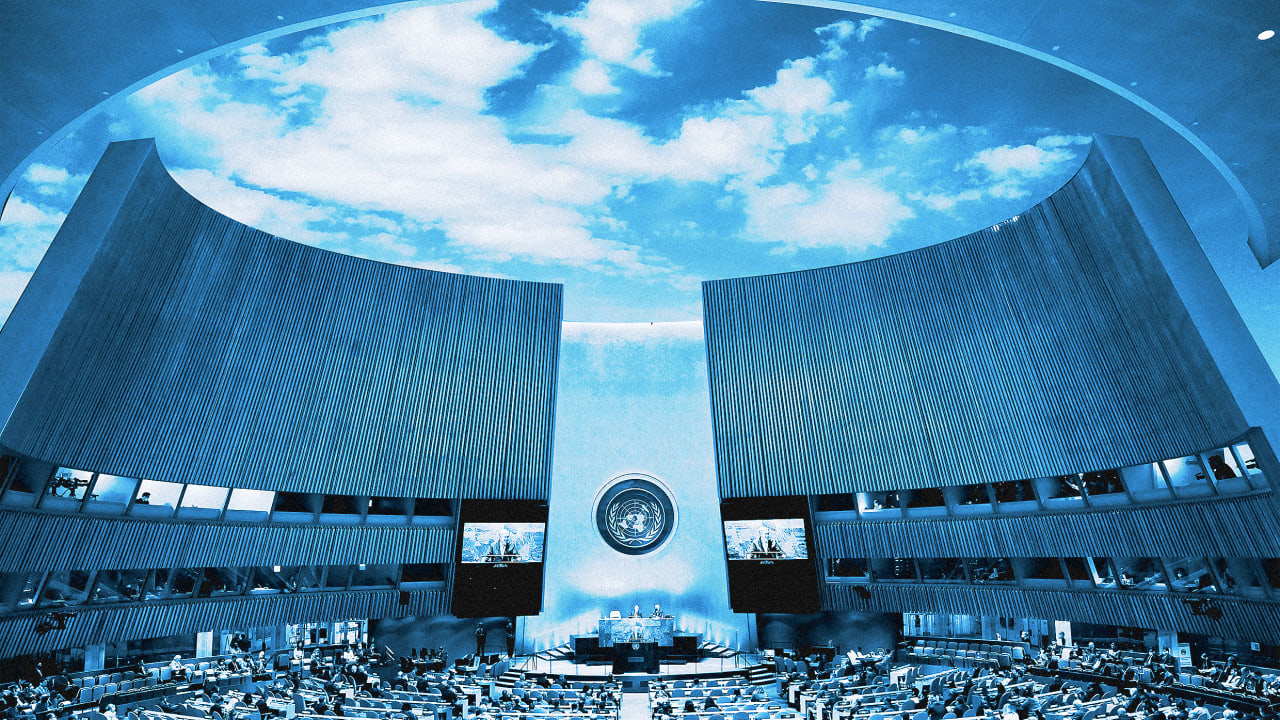
History didn't just happen; it was built. On Wednesday, the United Nations General Assembly stopped treating the Transatlantic Slave Trade as a tragic footnote and started calling it what it was: the gravest crime against humanity. This wasn't a unanimous "feel-good" moment. It was a sharp, divisive vote that exposed the massive gap between the Global South and the wealthy nations that built their empires on stolen labor.
If you think this is just symbolic bureaucracy, you're missing the point. The resolution, spearheaded by Ghana and backed by 123 countries, officially links the 400-year history of chattel slavery to the modern global economy. It’s not just about what happened in the 1700s. It’s about why certain countries are rich today and why others are still struggling to dig out of a hole dug centuries ago. You might also find this connected coverage insightful: Strategic Asymmetry and the Kinetic Deconstruction of Iranian Integrated Air Defense.
The Vote That Drew a Line in the Sand
The numbers tell a story of a world deeply split on the issue of accountability. While 123 nations cheered the adoption of resolution A/80/L.48, three major players—the United States, Israel, and Argentina—voted "no." Another 52 countries, including most of the European Union, Canada, and the UK, chose to abstain.
Why the resistance? It’s not that these countries think slavery was "okay." Their diplomats were quick to say they condemn the history. The real fear is the "R-word": reparations. As reported in recent coverage by The Washington Post, the effects are widespread.
By labeling the slave trade the "gravest" crime, the UN creates a new legal and moral weight. The US representative, Dan Negrea, argued that the UN shouldn't be "ranking" crimes against humanity. He also tossed out a legal defense that feels pretty flimsy to anyone on the other side of the Atlantic: he claimed the US doesn't recognize a legal right to reparations for things that weren't "illegal" when they happened.
Basically, the argument is: "We can't be sued because we made the rules back then."
Why Gravest is the Key Word
The resolution doesn't just call slavery a crime. It uses specific language to explain why it sits at the top of the hierarchy of horrors. It cites the "definitive break in world history" caused by the trade. We're talking about 13 million people kidnapped, shackled, and turned into "chattel"—legal property that could be sold, traded, or inherited like a piece of furniture.
Ghanaian President John Dramani Mahama wasn't pulling punches when he addressed the assembly. He pointed out that this wasn't just about "cruel individuals." It was an institutionalized architecture of states. Governments didn't just look the other way; they designed the laws, the ships, and the tax codes to make human trafficking the most profitable business on earth.
The Real Cost of "Mass Resource Extraction"
When we talk about the slave trade, we often focus on the plantations in the Americas. But this resolution highlights the "hollowing out" of the African continent. For four centuries, Africa didn't just lose people; it lost its brightest minds, its strongest workers, and its potential for growth.
Think of it as the ultimate brain drain, enforced by the crack of a whip. While Europe and the US used the wealth from cotton, sugar, and tobacco to fuel the Industrial Revolution, African nations were systematically stripped of the very humans needed to build their own futures.
Beyond the Apology
For decades, Western leaders have perfected the art of the "soft apology." They say they're "sorry for the pain" or that the history is "regrettable." This UN move is designed to end that era of vague sorrow.
The resolution explicitly supports reparative justice. This isn't just a request for a check in the mail—though financial compensation is part of the conversation. It’s a call for:
- Restitution of cultural items: The prompt return of artworks and archives stolen during the colonial era.
- Economic structural changes: Addressing how the global financial architecture still penalizes former colonies.
- Education reforms: Ensuring the history of the slave trade isn't sanitized in schoolbooks.
The Argument Against the Hierarchy
It’s worth looking at why the dissenters are so nervous. The US and its allies claim that by calling the slave trade the "gravest" crime, the UN is diminishing other atrocities like the Holocaust or various genocides.
But the African Union (AU) sees it differently. They argue that the Transatlantic Slave Trade created the very "racialized regime" that made later atrocities possible. It invented the idea that humans could be categorized by race and that some were naturally inferior. Without the 400-year "success" of the slave trade, the logic behind modern systemic racism wouldn't even exist.
What Happens Now?
General Assembly resolutions aren't legally binding. Nobody is going to be dragged into court tomorrow morning because of this vote. But don't let that fool you into thinking it's toothless.
This is about political recognition at the highest level. It gives groups like CARICOM (the Caribbean Community) and the AU a massive hammer to use in diplomatic negotiations. When they sit down with former colonial powers to discuss debt relief, climate funding, or trade deals, they now have a UN-sanctioned declaration stating that their current economic struggles are the direct result of a "gravest crime."
The era of treating reparations as a fringe activist demand is over. It's now a formal project of the African Union and a central part of the UN's agenda for the next decade.
If you're following this, the next big thing to watch is the Second International Decade for People of African Descent. Expect the pressure on the US and EU to move from "abstained" to "accountable" to ramp up significantly by the end of 2026. The world is finally realizing that you can't just "move on" from a crime that built the room you're standing in.
Start by looking up the "Ark of Return" memorial at the UN headquarters in New York. It’s a physical reminder of what this vote is trying to accomplish—turning a "door of no return" into a path toward actual repair.