The Shadow on the Border
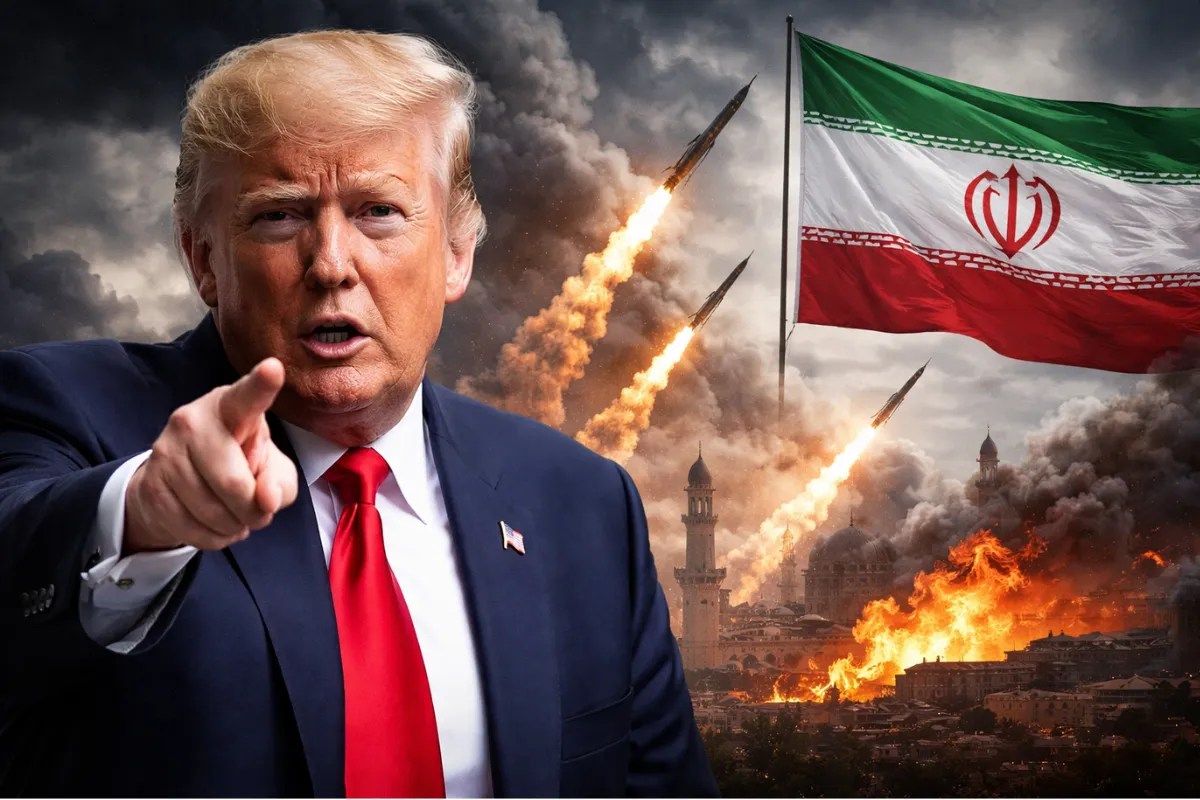
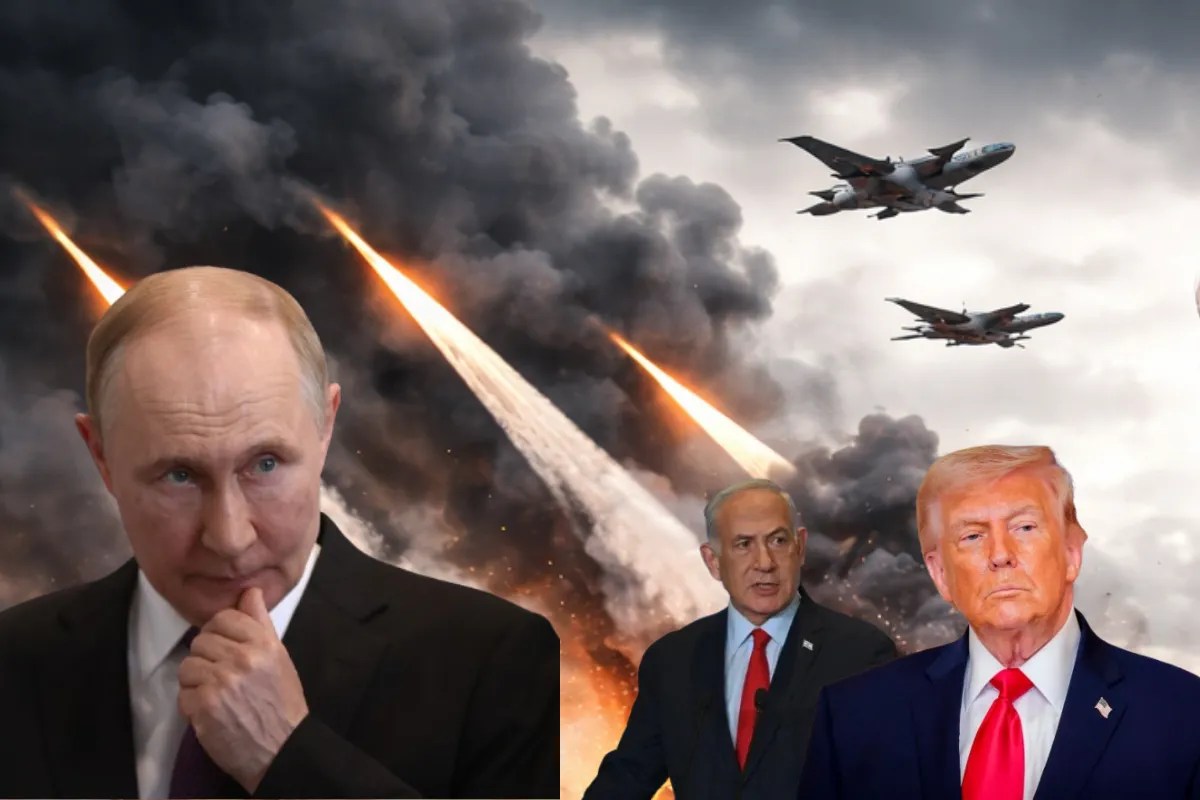
Think of a man standing in a narrow alleyway, flanked by two giants who have spent decades sharpening their blades. To his left, a superpower with a long memory and a heavy hand. To his right, a neighboring revolutionary power fueled by ideology and geography. The man in the middle has empty pockets, a flickering power grid, and a history of playing both sides just to keep the roof from caving in.
This is the reality for Pakistan.
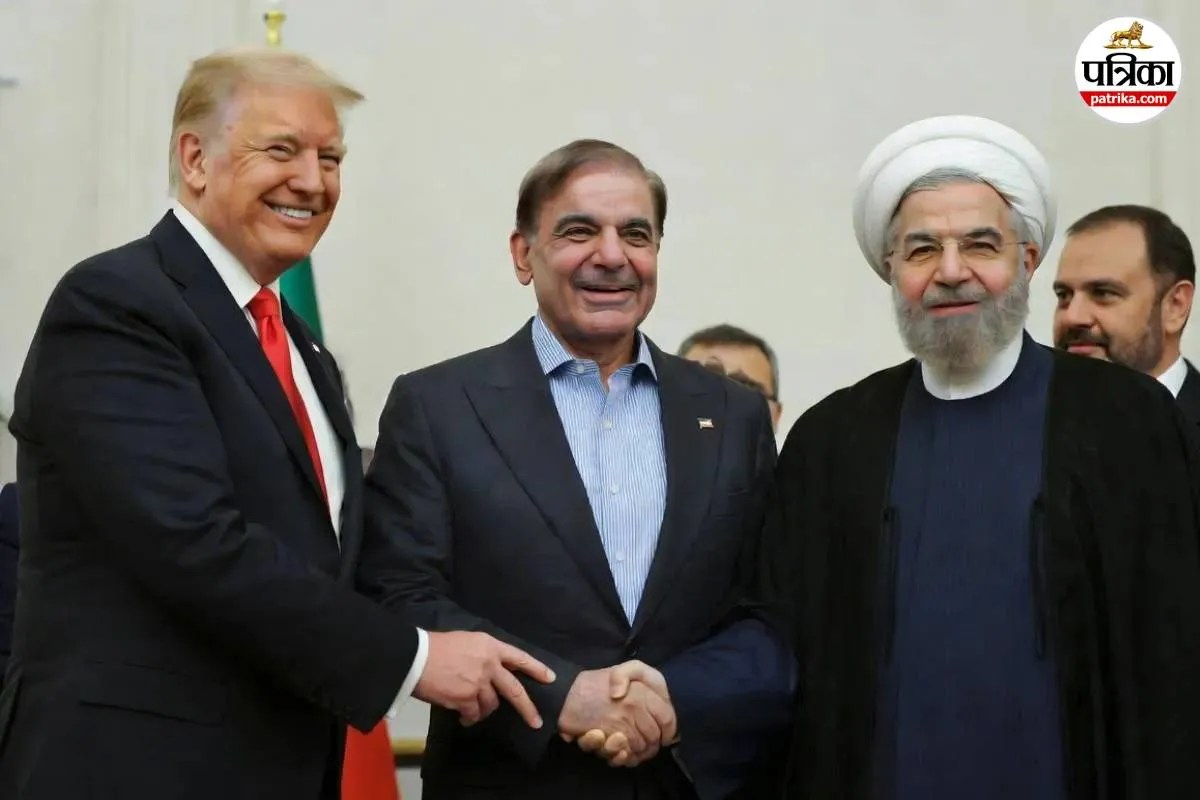
As tensions between Washington and Tehran simmer, the world often looks to Islamabad as a potential bridge. The narrative is tempting. It suggests that because Pakistan shares a 900-kilometer border with Iran and a complicated, multi-decade "situationship" with the United States, it is uniquely positioned to whisper peace into the ears of both. But the view from the halls of the Foreign Office in Islamabad is far less romantic. It is a view defined by survival, not soft-power idealism.
Former diplomats, those who have spent their lives decoding the subtle shifts in a general’s expression or the tone of a State Department cable, are now lifting the veil on this supposed "peacemaker" role. The truth is more jagged. Pakistan is not a neutral referee in this fight. It is a participant whose own stability is tied to the very conflict it is being asked to resolve.
A History of High-Stakes Whispering
The idea of Pakistan as a conduit isn’t a fantasy pulled from thin air. In 1970, it was Pakistan that helped open the door between Richard Nixon and Mao Zedong’s China. It was a masterclass in back-channel diplomacy. More recently, during the Trump administration, Islamabad was the primary facilitator for talks with the Taliban.
But Iran is a different beast entirely.
When a former ambassador reflects on the possibility of Pakistan brokering peace between the U.S. and Iran, they aren't looking at a blank slate. They are looking at a history of scars. During the 1980s, Pakistan was the staging ground for the anti-Soviet jihad, a move that pleased Washington but deeply unsettled Tehran. Later, the sectarian divide—Sunni-majority Pakistan and Shia-majority Iran—became a fault line that militant groups exploited, turning Pakistani soil into a proxy battlefield.
The stakes for the average Pakistani citizen are not found in geopolitical journals. They are found in the price of a bag of flour and the reliability of the gas stove. For years, the Iran-Pakistan gas pipeline has been the "ghost project" of the region. Iran has finished its side. Pakistan, terrified of triggering U.S. sanctions that would decapitate its already gasping economy, has left its side unbuilt.
Consider a shopkeeper in Quetta, near the border. For him, "peace" isn't a treaty signed in Geneva. It’s the ability to trade across the border without the fear of a drone strike or a closed crossing. When the U.S. and Iran trade blows, the shockwaves hit his storefront first.
The Washington Lever
The relationship between Islamabad and Washington has always been a transaction, never a romance. It is a cycle of "do more" and "not enough." For the U.S., Pakistan is a logistical necessity and a nuclear-armed headache. For Pakistan, the U.S. is the key to the International Monetary Fund (IMF) and the military hardware required to maintain parity with India.
When the U.S. looks at Iran, it sees a "malign actor." When it looks at Pakistan, it sees a partner that is frustratingly close to that actor.
The former ambassadors point out a cold reality: if Pakistan leans too far toward Tehran to act as a peacemaker, it risks the wrath of the American Treasury. In a country where the inflation rate has recently touched 30%, losing American favor isn't just a diplomatic setback. It is a national emergency.
The U.S. doesn't necessarily want Pakistan to be a bridge. It wants Pakistan to be a wall. Yet, a wall that is too thick risks pushing Iran into a corner, and a cornered neighbor is a dangerous thing for a country already fighting internal insurgencies in Balochistan.
The Tehran Tightrope
Across the border, Tehran watches with a mixture of pragmatism and suspicion. Iran knows Pakistan’s dependency on the West. They see the joint military exercises with Gulf monarchies—Tehran's rivals—and they calculate accordingly.
Yet, there is a deep cultural and linguistic tether that refuses to break. Persian influence runs through the very heart of the Urdu language. For the millions of Shia Muslims in Pakistan, Iran is more than a neighbor; it is a spiritual anchor. If the Pakistani state is seen as being too subservient to American interests against Iran, it risks domestic upheaval that no amount of riot police can contain.
This is the "invisible stake."
The government in Islamabad isn't just managing a foreign policy; it is managing a fragile social contract. To be a "peacemaker," you must be trusted by both sides. But in the eyes of Tehran, Pakistan is often seen as too compromised by the dollar. In the eyes of Washington, Pakistan is seen as too compromised by its geography.
The Myth of the Neutral Broker
There is a specific kind of arrogance in thinking that a country can simply decide to be a mediator. Mediation requires leverage.
What leverage does Pakistan hold?
It can offer a venue. It can pass messages. It can provide "deniability" for both sides to explore options without public commitment. But it cannot force either to the table. The "pole" that the former diplomats have "opened," as the headlines suggest, is the realization that Pakistan’s influence is at its lowest ebb in decades.
Internal political chaos has turned the country inward. When a house is on fire, the owner rarely has the bandwidth to settle a dispute between two neighbors down the street. The world sees the headlines about "peace missions," but the diplomats see the frantic cables about debt restructuring and fuel shortages.
The Human Cost of the Game
Imagine a young diplomat in Islamabad, sitting in a dimly lit office during a scheduled power outage. He is drafting a memo on regional stability. He knows that if he suggests a move that angers the U.S., his country might not get the next IMF tranche, and his own salary might not buy enough petrol to get him home. If he suggests a move that isolates Iran, a new wave of sectarian violence might erupt in his home province.
This is not a game of Risk. It is a high-wire act performed without a net, over a pit of fire.
The "peace envoy" narrative is often a tool used by Pakistani leaders to boost their standing on the world stage—a way to say, "We are still relevant. We are still the essential state." But the reality is that the U.S. and Iran often communicate quite clearly when they want to, using direct channels or European intermediaries who don't bring the heavy baggage of South Asian regional politics.
The Great Disconnect
The disconnect between the public rhetoric of "brotherly relations" and the private reality of "strategic mistrust" is widening.
The former ambassador's revelation isn't just about a failed policy; it’s about the exhaustion of a system. Pakistan has spent decades trying to be everything to everyone. It tried to be the frontline state for the U.S. while keeping the Taliban as an "asset." It tried to be Iran’s friend while taking billions from Saudi Arabia.
Eventually, the contradictions become too heavy to carry.
The world wants to believe in the "shantidoot"—the messenger of peace. It’s a clean, hopeful story. It suggests that there is a rational middle ground and a sensible neighbor who can bring everyone together for a handshake. But geography is a cruel master. Pakistan is trapped by its borders, its debts, and its history.
The real story isn't about how Pakistan will bring the U.S. and Iran together. It is about how Pakistan will prevent the fire between those two from burning its own house down.
Every time a missile flies in the Middle East, a phone rings in Islamabad, and the man on the other end has to decide which giant he can afford to disappoint today. It is a lonely, terrifying place to be. There are no heroes in this story, only survivors trying to navigate a map where the ink is still wet and the boundaries are constantly shifting.
The alleyway is getting narrower. The giants are getting louder. And the man in the middle is running out of room to turn around.